Appendix - deep Dive
Co-op Casa intersects with community values and priorities, the complexities of the housing market and existing affordable housing systems, and sustainability / environmental goals. Most of these exist on neighborhood, city, county, state, country and global levels. Our focus is to bring the best thinking, work and experience together from all these areas to provide permanent solutions to benefit Tucson and its residents.
If you make it through all these materials, please do contact Mark Goehring (markgoehring@coopcasa.org) for a conversation!
Index
Co-op Casa resident income levels and wealth building
Who Co-op Casa serves
Co-op Casa fee structure
10-year wealth building potential
- Savings compared to renting or buying
- Additional Savings potential for car-free
- Combined wealth building potential
Alignment with Local and International Goals
City and County policy alignment
Co-op Casa and United Nations Sustainability Goals
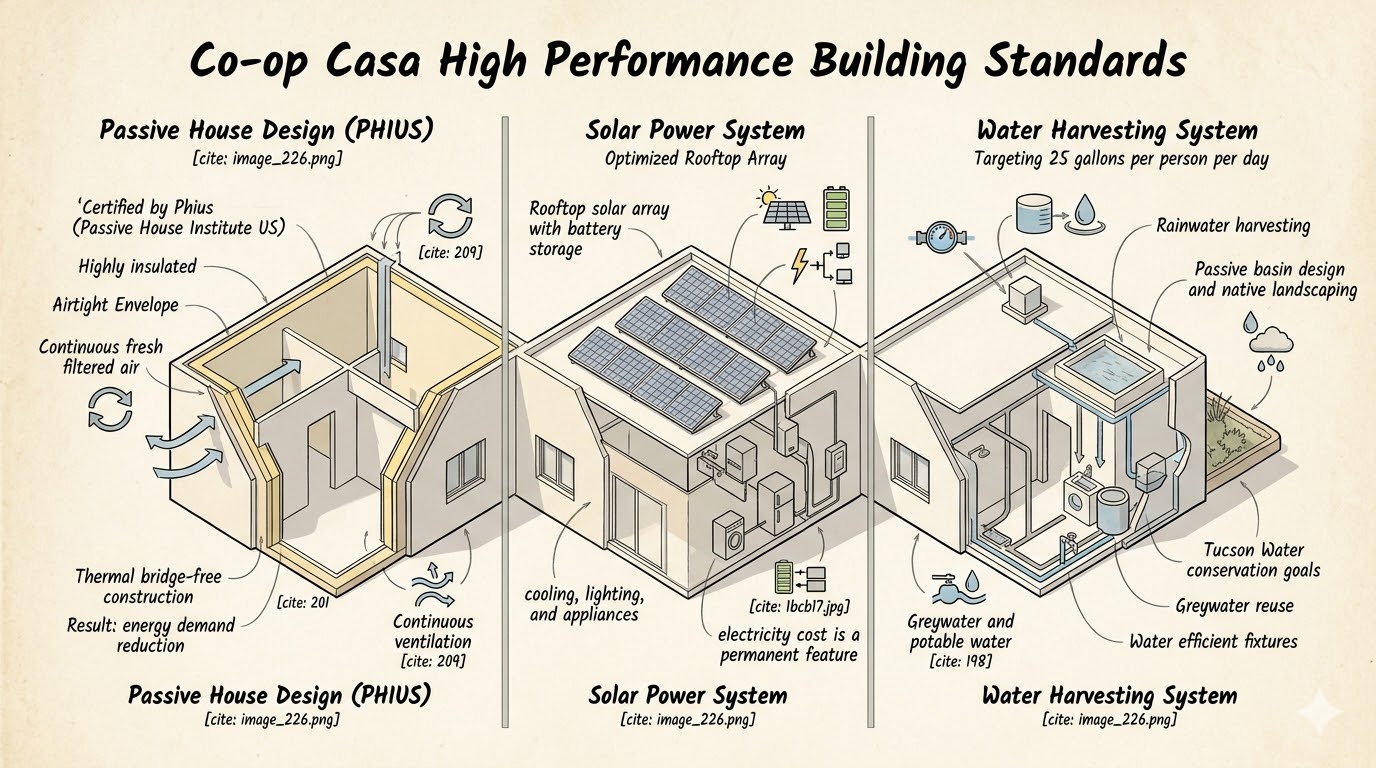
Building Standards
Passive House Design
Solar Power system
Water Harvesting system
Co-op Casa resident income levels and wealth building
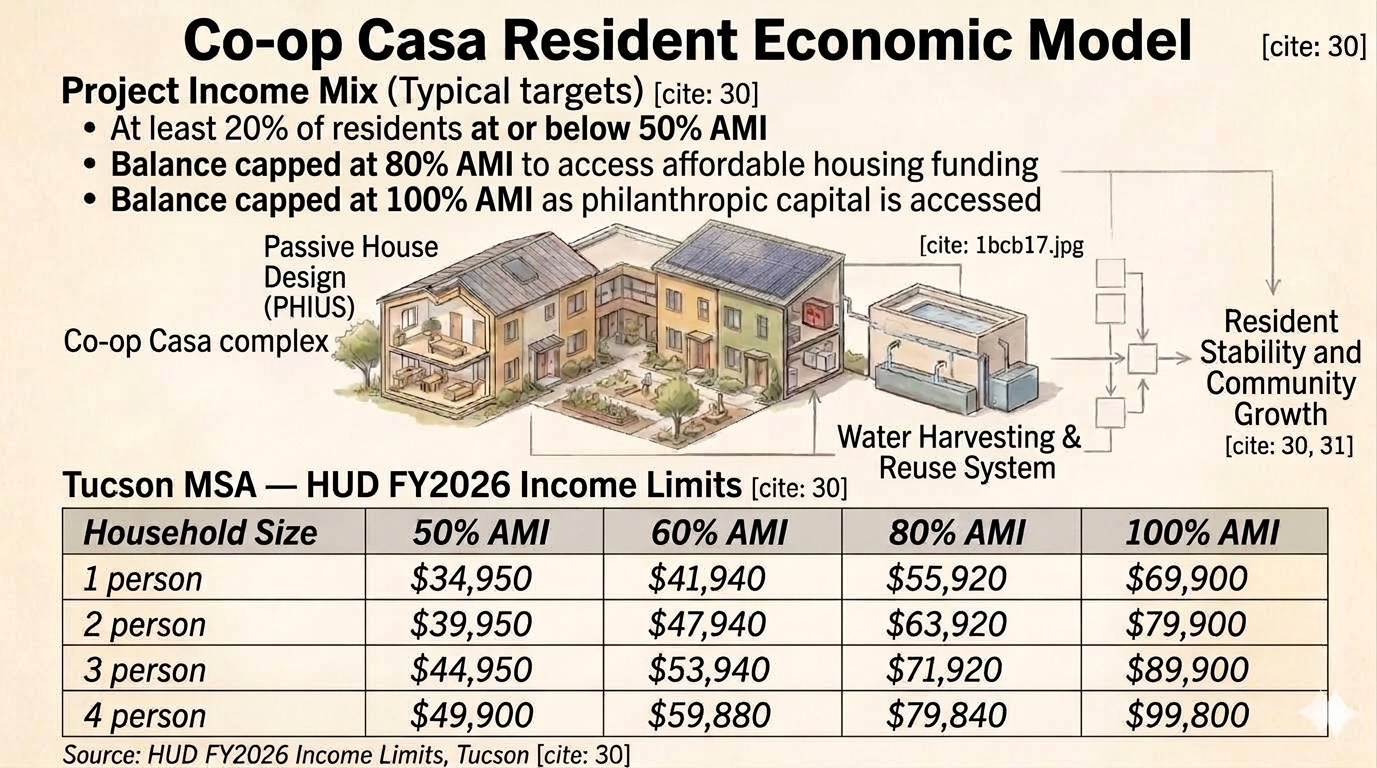
Who Co-op Casa Serves
Co-op Casa's primary goal is workforce housing — permanently affordable homes for households earning 50–100% of the Area Median Income (AMI.) Every project also includes units below 50% AMI to help alleviate displacement pressure in Co-op Casa's neighborhoods.
Co-op Casa Fee Structure
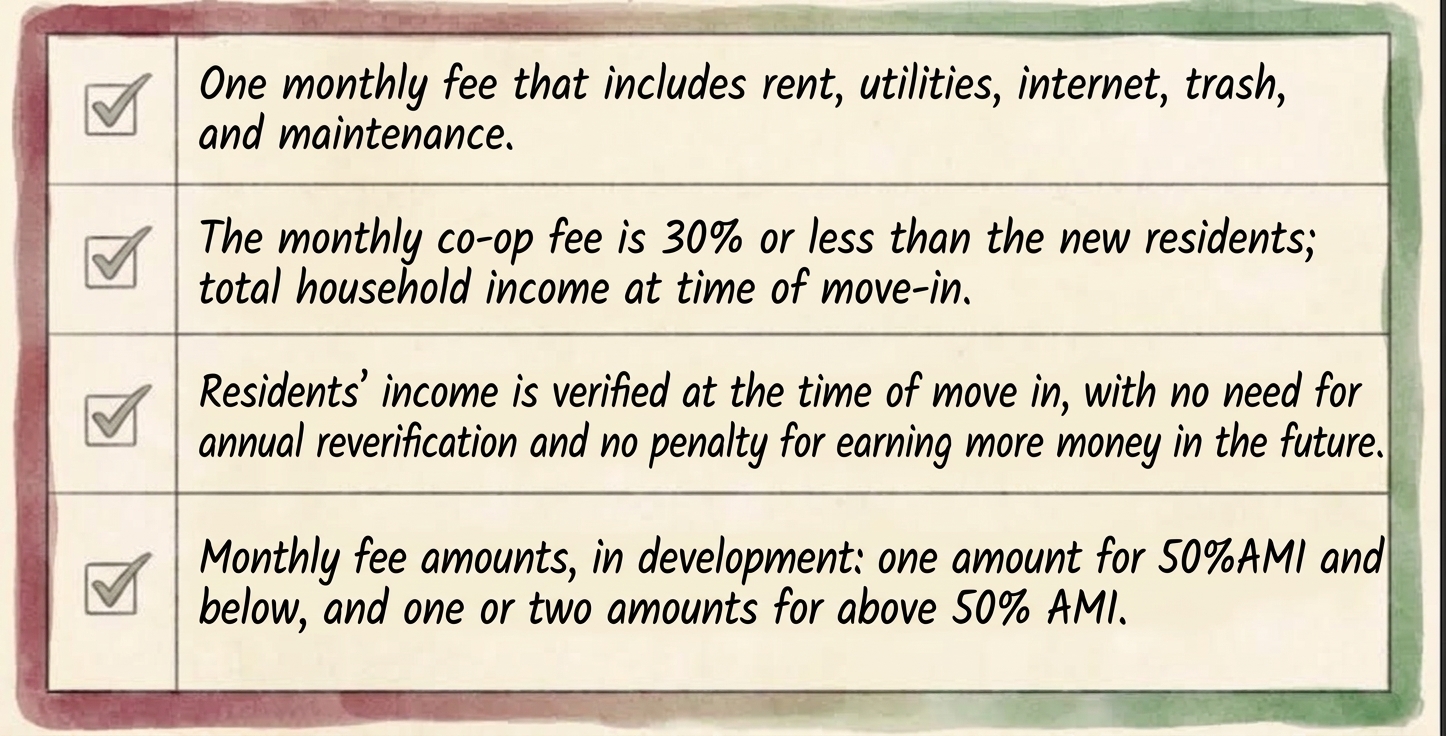
Co-op Casa’s fee structure is designed to be a) affordable to all residents regardless of income level,
b) simple with as few tiers as possible, and c) non-bureaucratic and non-intrusive.
The monthly co-op fee structure has yet to be finalized, but here are the guiding principles:
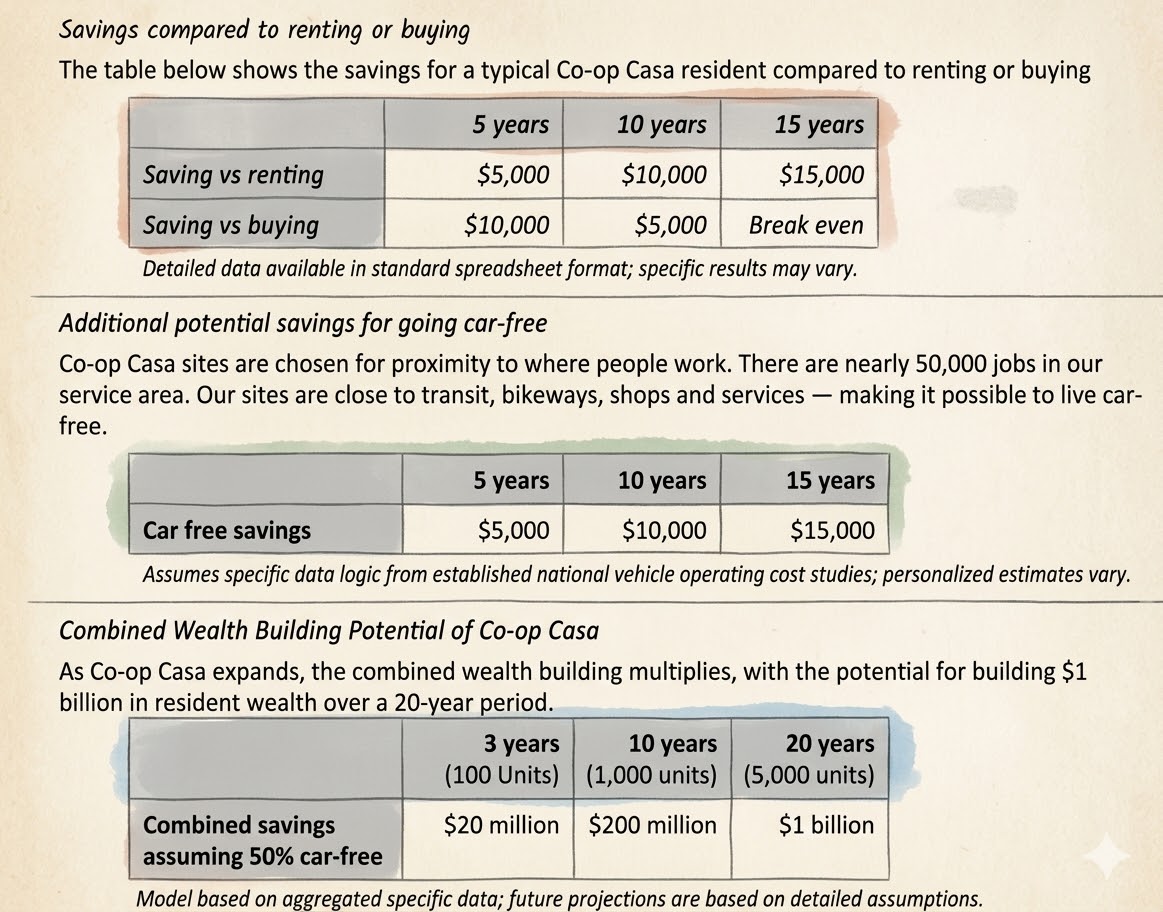
10-year wealth building potential
Our all-in monthly fee, built-in savings program, and potential transportation savings create a significant wealth-building opportunity for residents.
Alignment with Local and International Goals
Co-op Casa is a new organization with an innovative model — and by design,
deeply aligned with decades of research and planning at every level,
from the City of Tucson's neighborhood level to the UN's global sustainability framework.
Building Standards
To ensure permanent affordability we will design and buid for 200-year sustainability.
To achieve this we will use Passive House performance standards,
Co-op Casa will also feature a solar system and battery storage designed to meet residents' needs
and the best rainwater and graywater harvesting system.