

Why Co-op Casa Matters:
Much of Tucson's workforce can't afford to live here
The gap between what many Tucson workers earn and what housing costs is wide and growing. The teachers, nurses, bus drivers, and food workers who keep Tucson running typically earn between $32,000 and $76,000 a year. Market-rate housing near their jobs requires incomes of $80,000 or more. This gap produces real consequences — long commutes, high turnover, and families priced out of the city they serve.
Co-op Casa is built to fill the affordability gap by creating permanently affordable
homes for the households the market leaves behind.
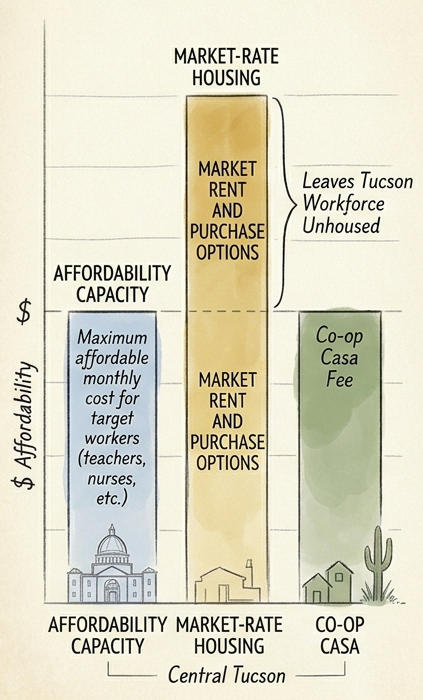
Most new housing in central Tucson makes the problem worse, not better
Most new development in central Tucson produces housing that is even less affordable than what already exists. The average monthly cost of new rentals including fees and utilities is substantially higher than existing rentals. The average monthly cost to purchase a new home is even higher.
There is still time to build affordable housing in central Tucson. But when vacant land is used for market-rate development, that land is gone forever. The potential for affordable housing disappears. The neighborhood changes.
Co-op Casa converts our most valuable locations to permanently affordable housing.
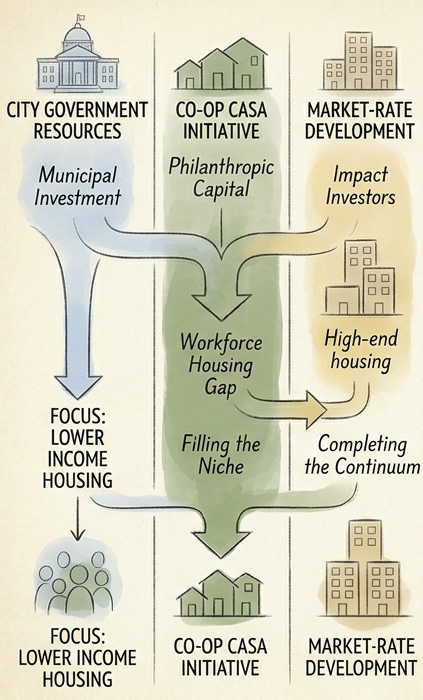
City government affordable housing is focused on lower-income households — not workforce housing
The City of Tucson has multiple housing initiatives underway, largely focused on households earning below $30,000 a year. That need is real and those programs matter. Co-op Casa focuses on workforce housing, for those who earn too much to qualify for City programs, but too little to afford market rate housing in central Tucson.
Cooperatives are a solution when the market and government don’t meet people's needs.
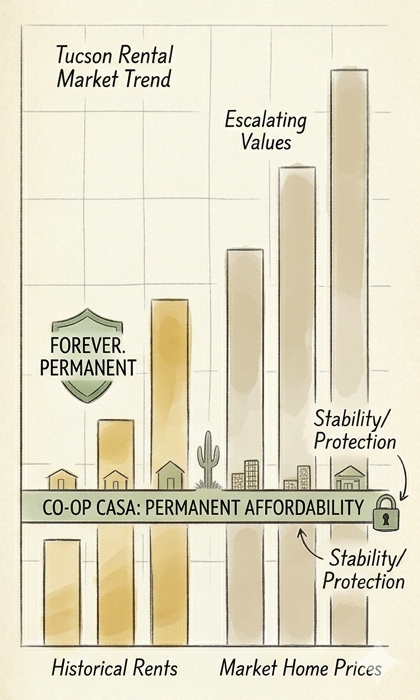
Infrastructure investment can have the unintended consequence of decreasing affordability
Rents in central Tucson have risen sharply as investments in downtown and transit development have made central Tucson more desirable. The people who have lived here longest — and who depend on transit, walkability, and proximity to services — are the first to be priced out.
Co-op Casa complements the City's investment in downtown and in transit corridors by creating affordable pocket neighborhoods in these areas.
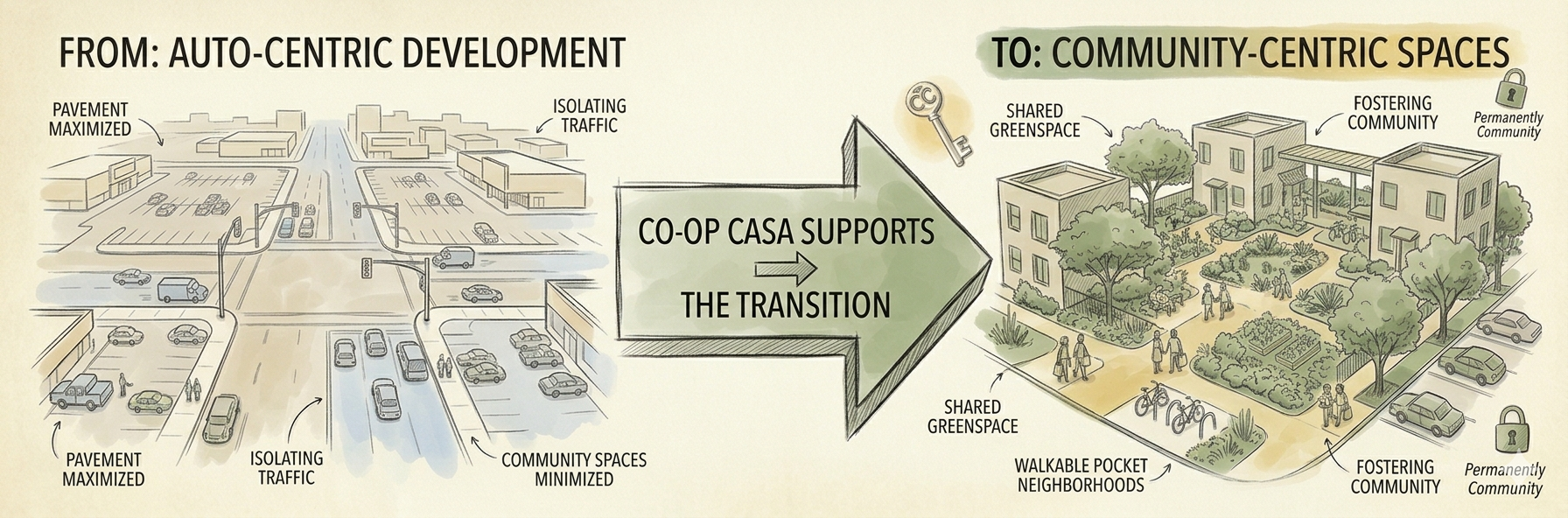
Co-op Casa prioritizes replacing auto-centric development patterns to foster community-centric spaces, intentionally creating spaces to change the way people live, for people ready for a change.